How to Transform Complex Messaging Into Self-Aware Humor
The self-aware copywriting technique.

I’m taking a break from Saturday examples to dive deeper into a specific copywriting example.
You’ll see my process. And how I create copywriting ads, emails, and landing pages for clients.
Pour coffee. Enjoy.
The Self-Aware Copywriting Technique
I don’t know if anyone else has coined the “Self-Aware Copywriting Technique,” but if not, I’m taking it.
It’s also the perfect technique for meeting your readers where they are in their brains. You’re figuring out how your audience thinks of your message.
Let’s see it in action.
First, we figure out what the email’s goal.
It’s not just educating users on nano-hydroxypatite (took forever to type that word). It’s about showing the features of Boka’s toothpaste.
The problem is it’s beyond boring.
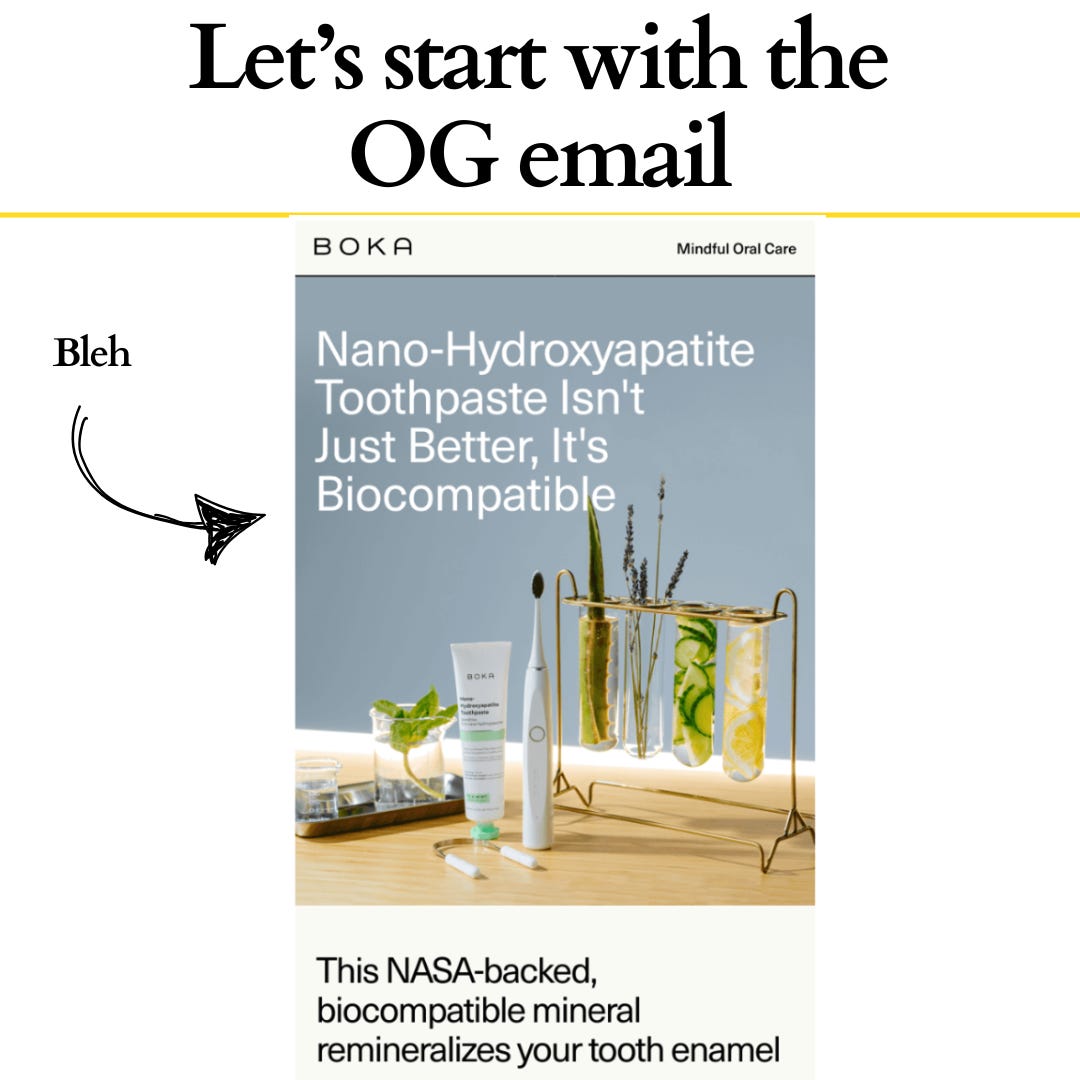
Now let’s rewrite it with a single strategy in mind:
Showcase the features of the email without lulling readers to sleep. And still drives home the point.
The first thing we do is start with the truth. I like what Leo Burnett says about truth:
"Truth is the foundation on which brands are built and on which consumer relationships flourish."
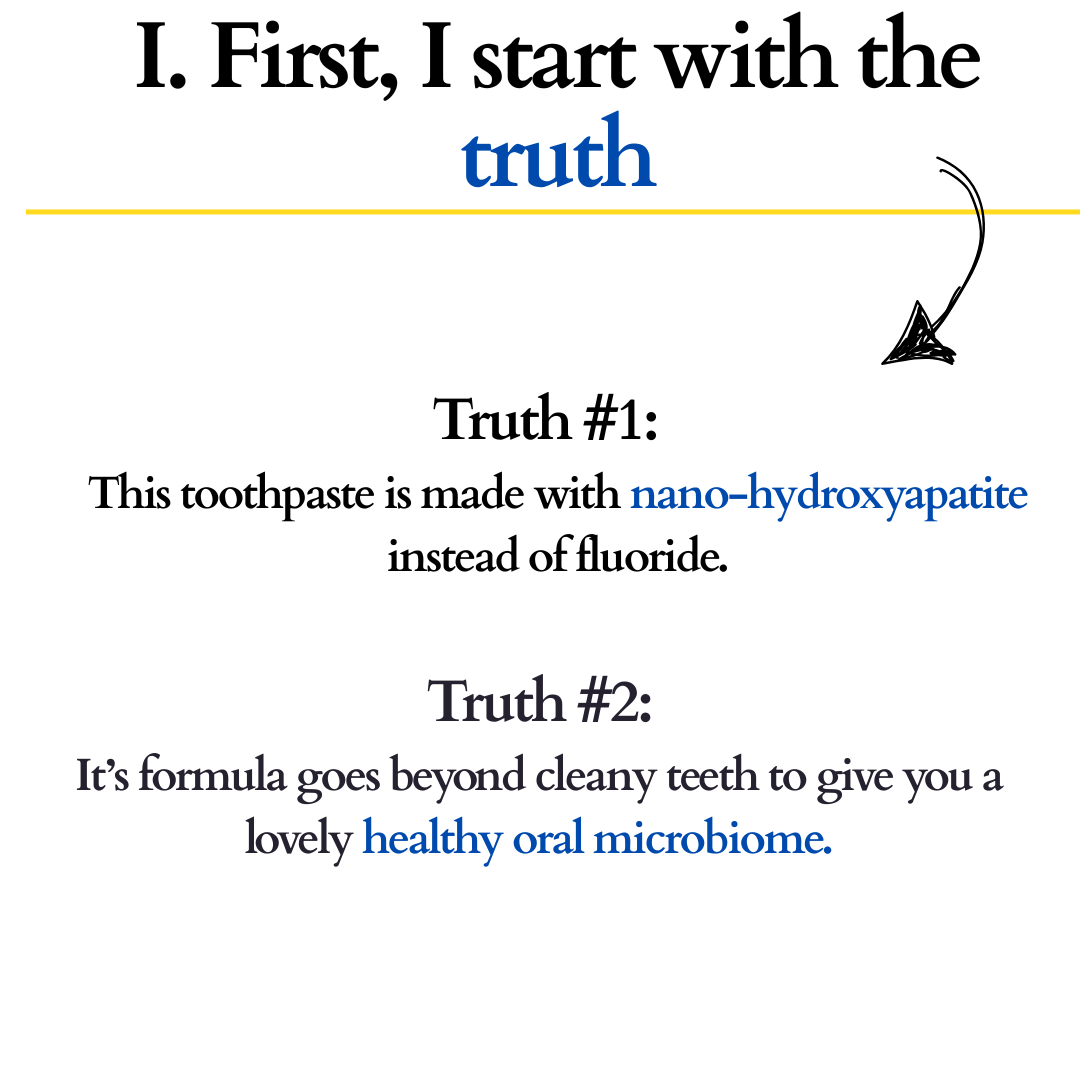
Next, we look for the brand’s promise that comes from the truth.
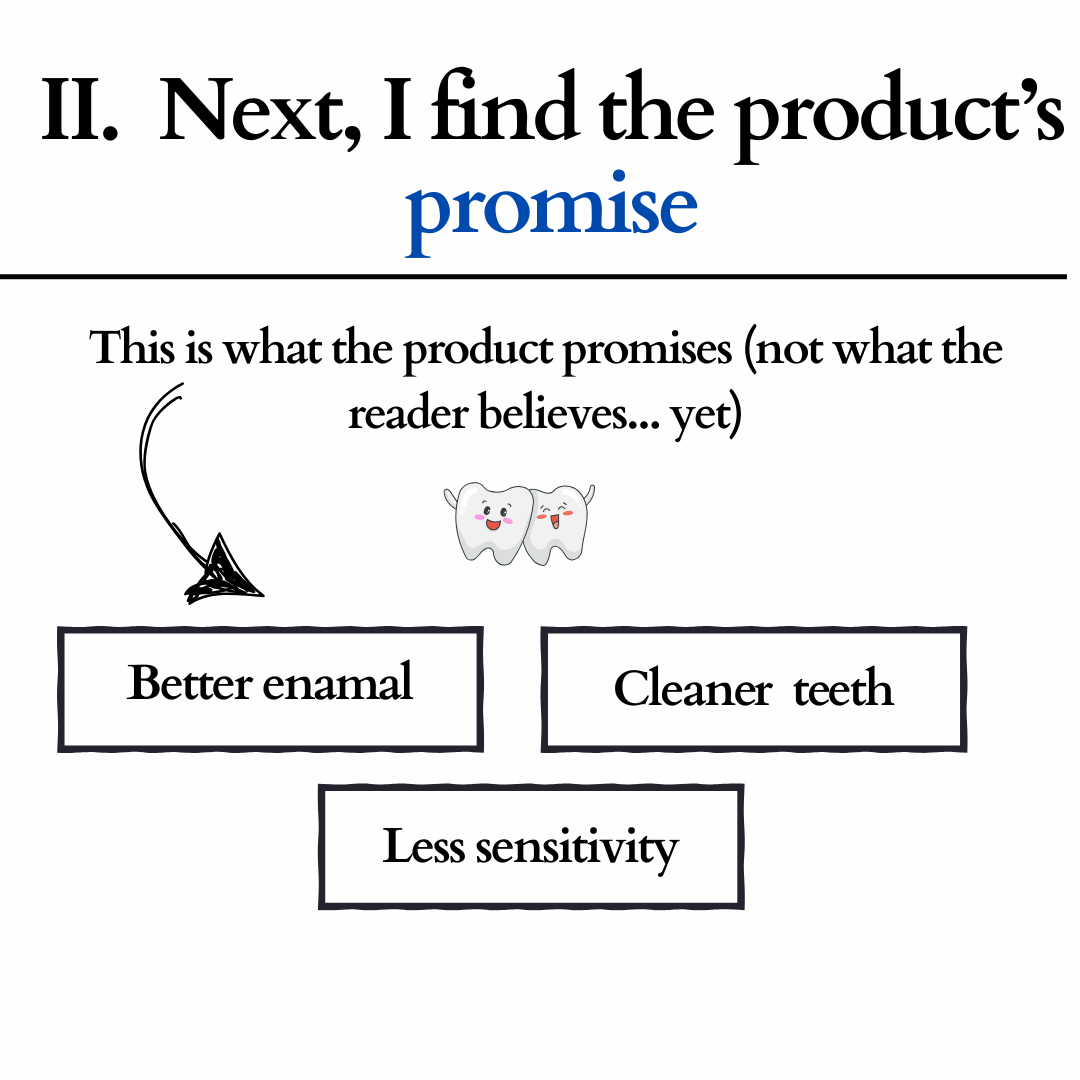
Then we look for the belief gap (why doesn’t the audience believe in the brand’s promise? What doubt arises in their minds?).
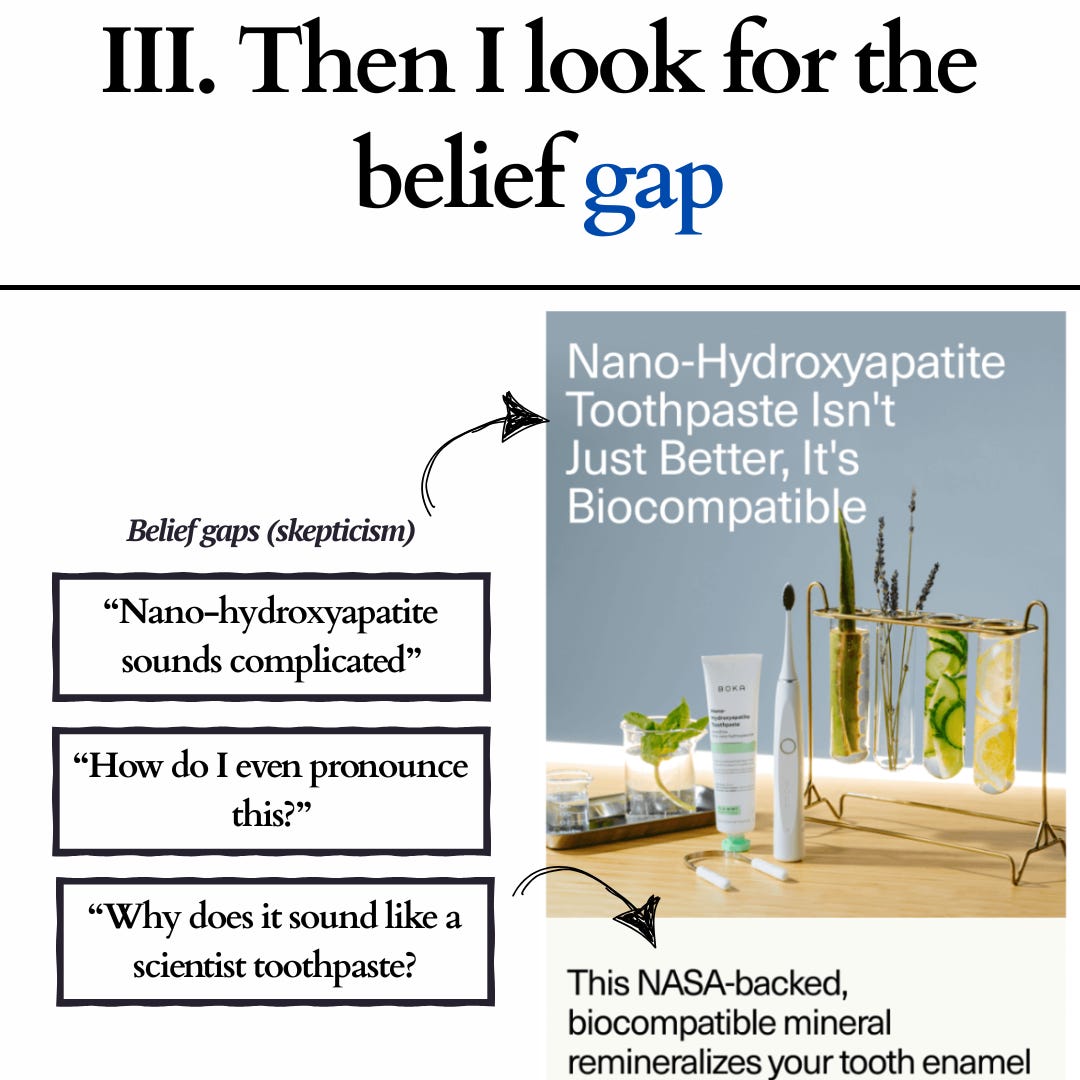
Nano-hydroxyapatite isn’t everyday language. It’s sciencey. It’s complex. It’s confusing.
And it’s a dry feature that needs its soul awakened
To do that, we introduce it to self-awareness.
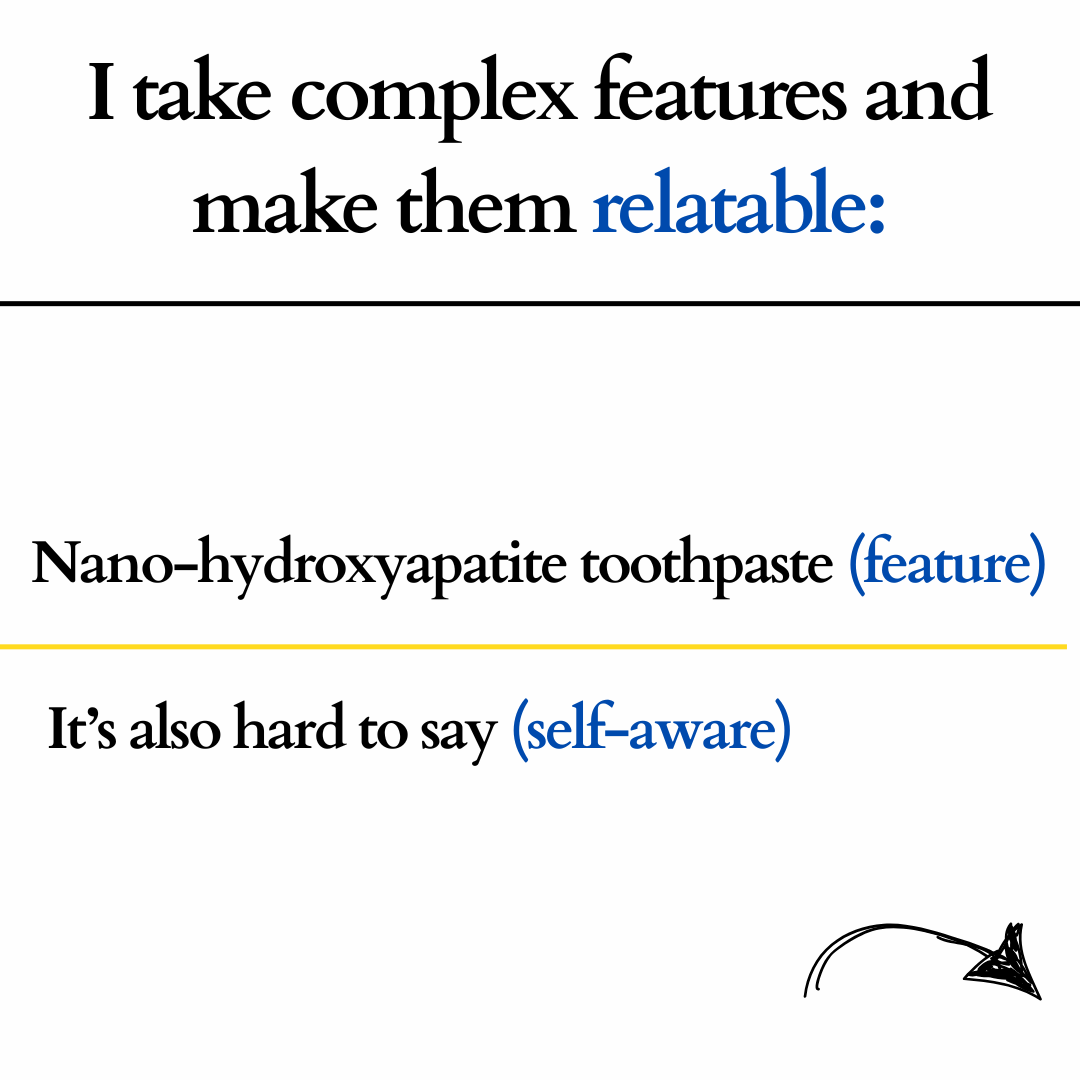
How can we turn these features into self-awareness messaging?
Here are a few exercises we can do:
How would a brutally honest friend say it to you if you mentioned these features to them?
How would a sarcastic customer say it?
What’s a hidden truth that nobody says about the product?
Let’s also rework the social proof line at the bottom of the email.
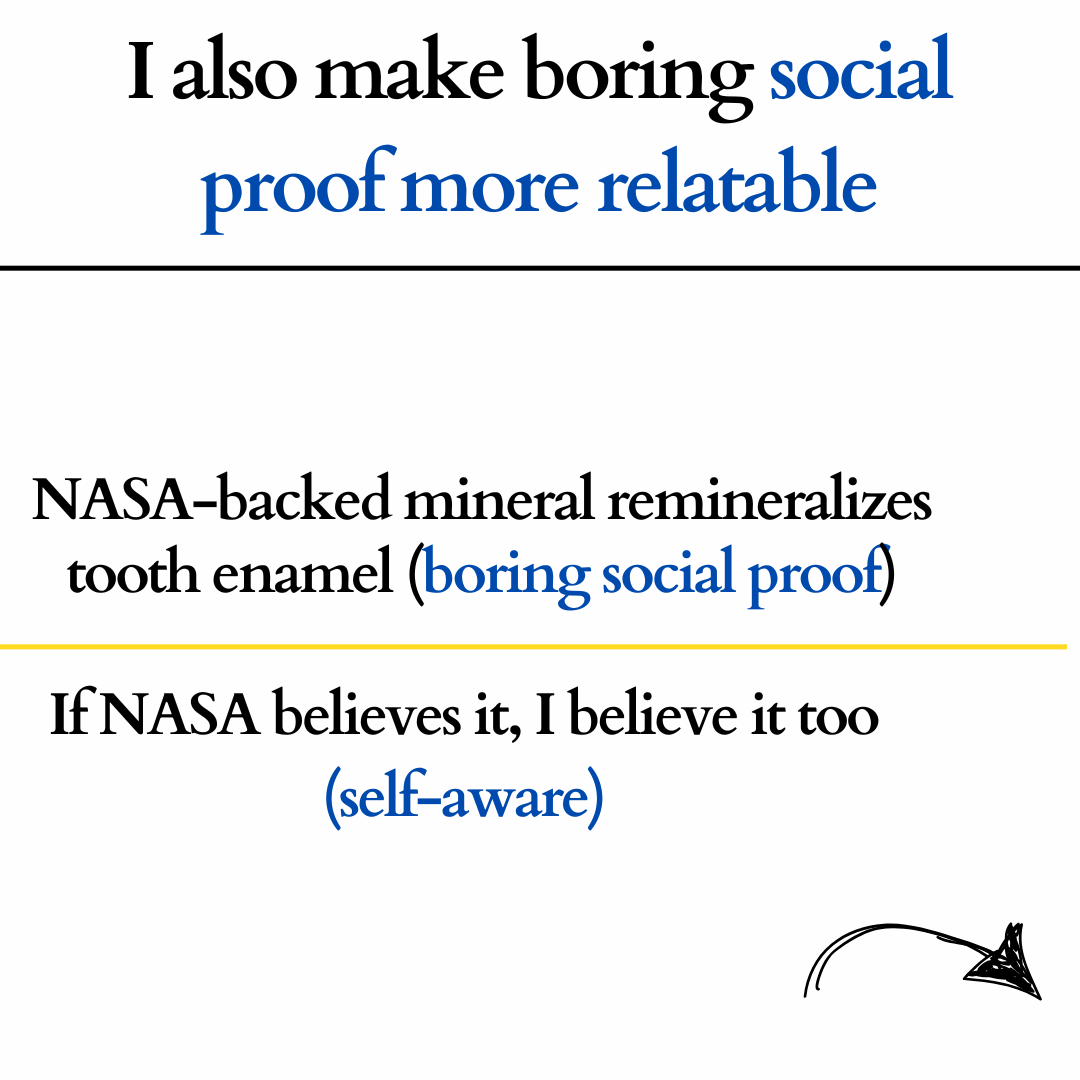
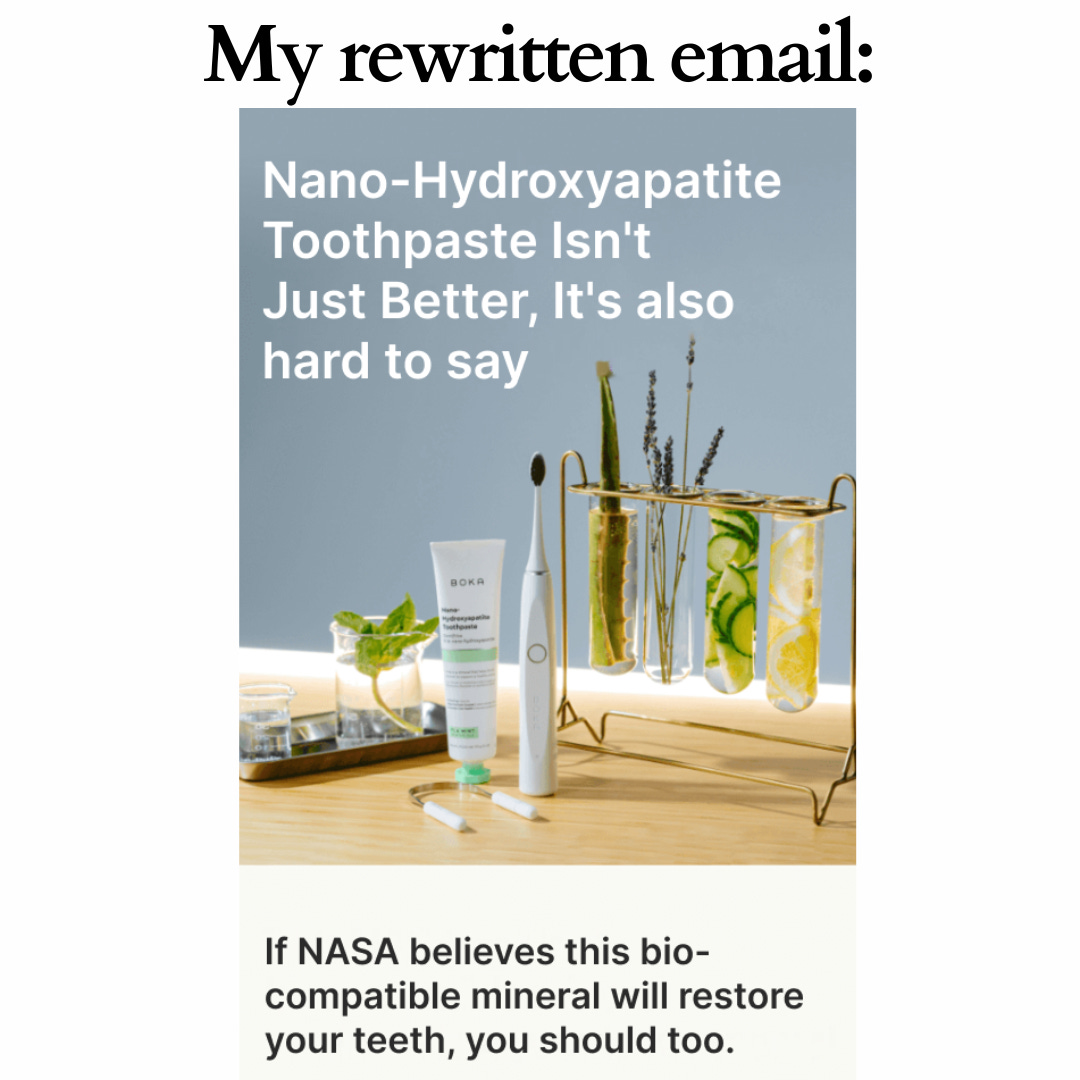
Then we put it together.
Now we have an email worth reading.